Source anti slippery cork sandals for beach, pool, and party
Explore 30 listings of anti slippery cork sandals suitable for beach, pool, and party use. Buyers can compare adjustable strap designs, cork materials, and bulk pricing options from verified suppliers.
Key considerations
Products List


Comprehensive Sourcing Guide
Strategic Sourcing Guide for Anti-Slippery Cork Sandals
Understanding Product Specifications and Material Composition
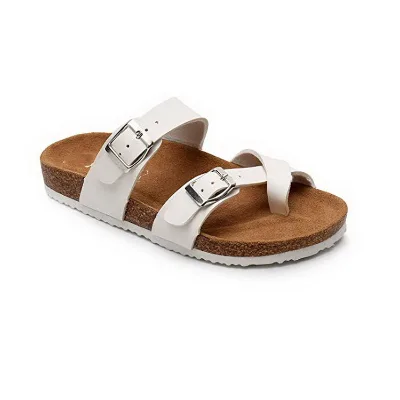
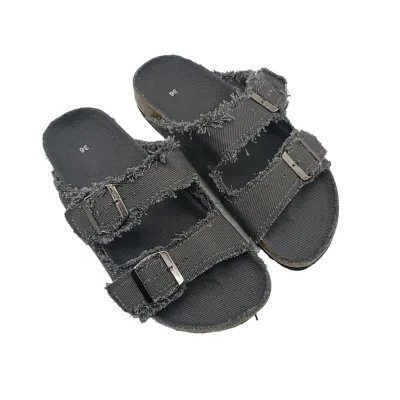
When sourcing anti-slippery cork sandals, buyers must first establish a precise understanding of the technical specifications that define the product category. The core keyword "anti-slippery cork sandals" points to a specific subset of footwear designed for both indoor and outdoor environments, including beaches, pools, and party settings. The primary material driver for this category is the cork midsole, which provides a natural, cushioned feel often described as comfortable. In the observed product data, the midsole material is explicitly listed as cork, while the outsole material frequently combines EVA (Ethylene-Vinyl Acetate) and cork. This combination is critical for achieving the desired balance between shock absorption and grip.
The upper material varies significantly across different listings, ranging from canvas to cotton fabric and mesh. For instance, specific models feature canvas uppers with cotton fabric linings, while others utilize mesh linings for enhanced breathability. The toe style is predominantly open-toe, which is standard for this sandal type, allowing for ventilation and ease of wear in warm climates. The color options are highly flexible, with some suppliers offering "as request" customization, while others list specific palettes like grey, black, and blue. It is essential for buyers to note that while "anti-slippery" is a common feature, the specific performance depends on the tread pattern and the hardness of the EVA or cork outsole. The construction method is typically injection molding using PU/TPU, ensuring durability and a secure bond between the upper and the sole.
Compliance, Certification, and Safety Verification
In the realm of B2B footwear procurement, verifying compliance and safety standards is paramount, particularly when marketing products with specific functional claims like "anti-slippery." While the provided product data mentions features such as "Anti-Slippery," "Puncture-Resistant," and "Steel Toe," it is crucial to distinguish between casual sandals and industrial safety footwear. Some listings in the market mix these categories, offering "Outdoor Safety Footwear" with steel toe caps capable of bearing 200 Joules of impact. However, for standard cork sandals intended for beach or casual use, the focus shifts to general safety and material safety rather than heavy industrial certification.
Buyers should not assume that a product listing implies full compliance with international standards such as ISO 20345 or ASTM F2413-18 unless explicitly verified through third-party testing reports. The provided context lists these standards as background information but does not confirm their application to every listed item. Therefore, procurement teams must request specific test certificates for slip resistance, particularly if the sandals are intended for commercial environments like restaurants or pool decks where wet surfaces are common. Additionally, material safety certifications like OEKO-TEX should be verified to ensure that the cork, EVA, and fabric components are free from harmful substances. Without explicit documentation, claims regarding "Acid and Alkali Resistant" properties or "Anti-Static" capabilities should be treated as observations of specific models rather than universal product attributes.
Cost Drivers and Pricing Dynamics
The pricing structure for anti-slippery cork sandals is influenced by several distinct variables, primarily material costs, customization levels, and order volume. The observed price range in the market spans from $1 to $50 USD, a wide spectrum that reflects the diversity in quality and specification. The lower end of this range typically corresponds to basic models with standard canvas or mesh uppers and minimal customization. In contrast, the higher price points are driven by the use of premium cork, complex buckle designs, and extensive OEM branding services.
Material costs are a significant driver, especially given the fluctuating prices of natural cork and synthetic EVA. The sourcing guide notes that the outsole material is a composite of EVA and cork, meaning that the ratio and quality of these materials directly impact the final unit cost. Furthermore, the packaging details reveal that costs can vary based on the chosen packing method, such as polybag packing versus clear box packing. For example, a 1x40 HQ container can hold approximately 15,000 pairs with box packing or 25,000 pairs with polybag packing, which affects the per-unit shipping and handling costs.
Order volume is another critical factor. The Minimum Order Quantity (MOQ) ranges widely, from as low as 1 pair to as high as 2,000 pairs, with specific high-confidence data points indicating MOQs of 300, 800, and 1,000 pairs for different models. Buyers must align their order quantities with these thresholds to secure competitive pricing. The supply ability of manufacturers, often cited as 20,000 pairs per month, suggests that large orders can be fulfilled without significant lead time delays, but this capacity must be confirmed during the negotiation phase.
Typical Applications and Usage Scenarios
Anti-slippery cork sandals are versatile products designed for a wide array of applications, ranging from leisure activities to specific commercial environments. The product data explicitly lists uses such as beach, indoor, outdoor, party, and pool settings. This versatility makes them suitable for resort wear, summer festivals, and casual daily wear. The "spring and autumn" season designation indicates that these sandals are not limited to peak summer months but can be worn in transitional weather due to their breathable materials.
For commercial buyers, the "anti-slippery" feature is particularly valuable in hospitality and retail sectors. Sandals with features like "Hard-Wearing" and "Quick-Drying" are ideal for poolside service or beachfront cafes where water exposure is frequent. However, buyers must be cautious when selecting footwear for industrial or high-risk environments. While some listings mention "Steel Toe" and "Puncture-Resistant" features, these are typically associated with safety work shoes rather than standard cork sandals. If the procurement goal is to outfit staff in a warehouse or construction site, the buyer must specifically seek out models that meet the rigorous safety standards for toe protection and slip resistance, rather than assuming standard fashion sandals will suffice.
Supplier Evaluation and Sourcing Capabilities
Evaluating suppliers for cork sandals requires a deep dive into their manufacturing capabilities, location, and flexibility. The majority of the observed supply originates from Fujian, China, a region known for its robust footwear manufacturing infrastructure. The port of dispatch is frequently listed as Fuzhou, which is a strategic location for international shipping. When evaluating potential partners, buyers should verify the supplier's supply ability, with a common benchmark being 20,000 pairs per month. This capacity ensures that the supplier can handle bulk orders without compromising on quality or delivery schedules.
Customization is a key differentiator in this market. Many suppliers welcome OEM (Original Equipment Manufacturer) and ODM services, allowing buyers to customize logos, colors, and packaging. The "Logo: OEM Accept" and "Customization: Available" attributes indicate a high level of flexibility. However, buyers should confirm the specific requirements for customization, such as the minimum order quantity for branded items, which can differ from standard stock orders. Additionally, the packaging details, including size labels, plastic loops, and polybag options, should be reviewed to ensure they meet the buyer's retail or distribution requirements.
Quality Control and Inspection Protocols
Implementing a robust quality control (QC) protocol is essential when sourcing footwear with specific performance claims. Given the wide range of observed features, from "Comforable" linings to "Anti-Slippery" soles, buyers must define clear acceptance criteria before production begins. Inspection should focus on the integrity of the cork midsole, ensuring it is free from cracks or delamination, and the bond between the upper and the outsole. The construction method, often PU/TPU injection, should be inspected for consistency and strength.
For products claiming "Anti-Slippery" properties, buyers should request slip resistance test results on wet and dry surfaces. While the provided data lists this as a feature, the actual performance can vary based on the tread design and material hardness. Similarly, for models with "Steel Toe" or "Puncture-Resistant" claims, visual inspection of the toe cap and midsole penetration resistance is necessary. The single gross weight of 1.0 kg and package dimensions of 30x20x10 cm serve as useful benchmarks for verifying that the product matches the ordered specifications. Buyers should also check the lining material, ensuring that cotton fabric or mesh is securely attached and free from defects that could cause discomfort or premature wear.
Long-Term Procurement and Relationship Management
Sourcing anti-slippery cork sandals is not merely a transactional activity but a strategic initiative that requires long-term planning. The variability in MOQs, ranging from 1 to 2,000 pairs, means that buyers must develop a flexible procurement strategy that can adapt to changing market demands. For new entrants or those testing the market, starting with lower MOQs allows for risk mitigation, while established brands may leverage higher volumes to secure better pricing and priority production slots.
Building a strong relationship with suppliers is crucial for maintaining consistent quality and supply continuity. Suppliers with a proven track record of "OEM Welcomed" and "Logo Acceptance" are better positioned to support brand growth. Buyers should also consider the lead times associated with different packaging options and customization requests. While the supply ability is high, complex customizations may require additional time for tooling and sample approval. Establishing clear communication channels and agreeing on quality standards early in the partnership will help prevent disputes and ensure that the final product meets the buyer's expectations. By focusing on these long-term considerations, buyers can secure a reliable supply chain for anti-slippery cork sandals that supports their business objectives and brand reputation.
FAQs
What is the minimum order quantity for anti slippery cork sandals?
The minimum order quantity varies by model, with observed values of 300, 800, and 1000 pairs. Buyers must check specific product listings as some models require up to 2000 pairs while others allow smaller orders.
Which materials are used for the outsole of these sandals?
The outsole typically combines EVA and cork to ensure durability and grip. This composite material provides the necessary shock absorption and anti-slippery performance required for beach and pool environments.
Can suppliers customize the logo and packaging for these sandals?
Yes, OEM services are welcomed and customization is available for logos and packaging details. Suppliers offer options like polybag or clear box packing with size labels and plastic loops included freely.
Where are the manufacturers of anti slippery cork sandals located?
Most manufacturers are located in Fujian, China, with Fuzhou as the primary port of dispatch. This region offers a robust infrastructure for footwear production and international shipping logistics.
What is the monthly supply ability for these cork sandals?
The supply ability is generally around 20,000 pairs per month for standard models. This capacity allows suppliers to fulfill bulk orders without significant delays, though complex customizations may require extra time.
Are these sandals suitable for both indoor and outdoor use?
Yes, these sandals are designed for versatile use including beaches, pools, parties, and indoor settings. Their breathable materials and quick-drying features make them ideal for spring, autumn, and summer seasons.